
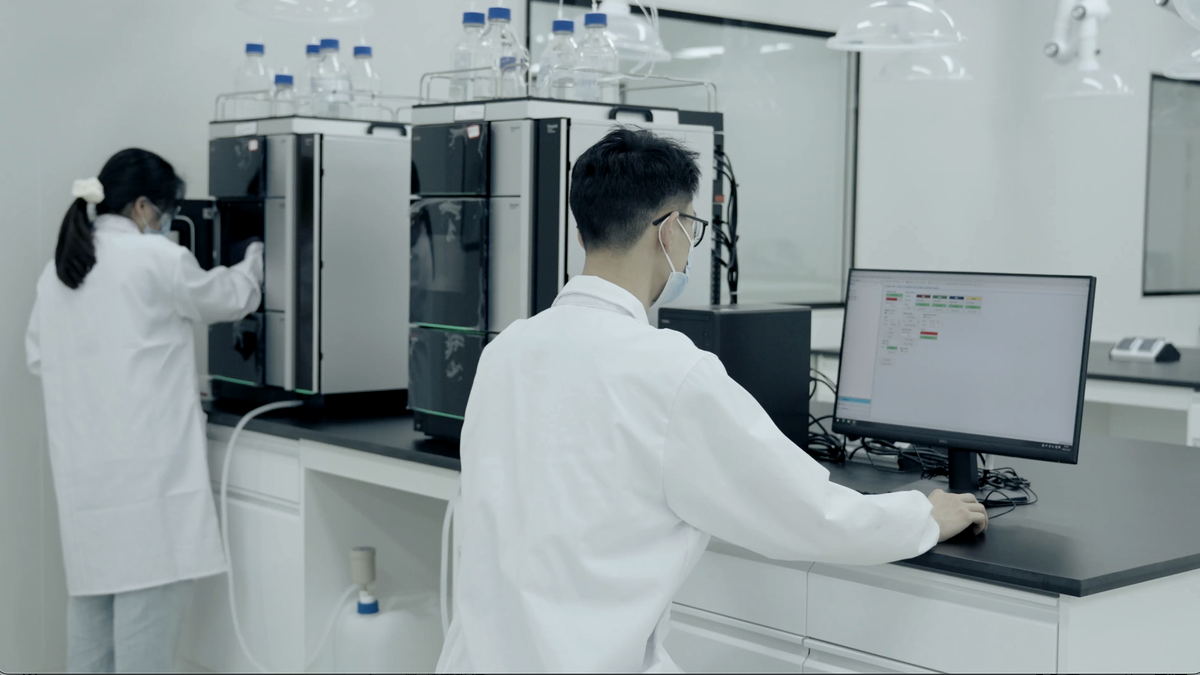
Moving a peptide process from development into production involves more than transferring a written procedure from one facility to another. Custom peptide synthesis service work must also carry over the process knowledge behind each critical operation, including reaction control, purification, sampling, and material handling.
The difference between a workable laboratory method and a practical production process often comes from details that are easy to overlook. At UTIDE, we treat technology transfer as a structured exchange of process knowledge, with attention to how each operation behaves under larger manufacturing conditions.
Defining the Transfer Package
A useful transfer package should describe more than reagent quantities and reaction times. It can include raw material specifications, equipment requirements, process parameters, analytical methods, sampling instructions, and known process sensitivities. Such information gives the receiving team a clearer understanding of why each step is performed in a particular way.
Process history also has value during transfer. Development records can reveal which parameters were adjusted, which impurities appeared during earlier batches, and which conditions produced better results. Peptide process development becomes much easier to transfer when these observations are documented instead of relying only on the final manufacturing procedure.
Clear terminology matters as well. Different teams may use different names for similar operations or interpret process ranges differently. A shared technical package should define important terms, acceptable ranges, calculation methods, and sampling points so that both sides work from the same reference.
Translating Laboratory Parameters
Laboratory conditions cannot always be copied directly into larger equipment. Stirring speed, vessel geometry, heat transfer, addition distance, and liquid depth can all change after scale increases. The objective is usually to preserve the important process behavior rather than reproduce every laboratory number.
During peptide scale-up manufacturing, parameters should be reviewed according to their actual impact on the reaction. Mixing time may matter more than a specific rotational speed, while controlled addition may be more important than simply maintaining the same concentration. This distinction helps teams identify which values require adjustment during transfer.
Process knowledge can also be expressed through ranges rather than isolated numbers. A defined operating window gives production teams room to account for equipment differences while keeping the process within its established boundaries. That approach becomes increasingly useful as batch sizes increase.
Managing Scale-Dependent Equipment
Equipment selection can influence peptide processing in several ways. Vessel shape affects circulation, filtration capacity affects recovery, and chromatography systems influence loading and separation behavior. Even equipment designed for the same general operation may perform differently at another scale.
For large scale peptide synthesis, equipment compatibility should be reviewed before production begins. Questions may include whether the vessel can maintain suitable temperature control, whether additions can be introduced at an appropriate rate, and whether the available filtration area matches the expected material load.
Material transfer between equipment can create another practical issue. Highly concentrated peptide solutions, suspensions, or viscous mixtures may require different handling methods at larger volumes. A technology transfer package should identify such physical considerations before they become production obstacles.
Preserving Purification Performance
Purification often requires particular attention during technology transfer because chromatographic behavior can change with scale. Column dimensions, loading, flow rate, solvent consumption, and fraction collection all influence separation performance. A laboratory chromatogram alone cannot describe every production-scale requirement.
A large scale peptide synthesis service may involve multiple purification stages, depending on the peptide sequence and impurity profile. Each stage should have a defined purpose, such as removing truncated sequences, protecting-group residues, reaction byproducts, or closely related variants.
Analytical comparison is valuable during this transition. Purity, identity, residual solvents, water content, and other relevant attributes can be compared between development and manufacturing batches. These results help determine whether the transferred process is behaving within the expected range.
Strengthening Process Communication
Technology transfer works best when technical communication continues throughout the project. Questions about unusual observations should be documented and resolved with reference to actual process data. Informal assumptions can create confusion when different teams interpret the same manufacturing step in different ways.
For custom peptide manufacturing, communication should connect development, quality, analytical, and production personnel. Each group sees different parts of the process, so combining those perspectives can reveal risks that might otherwise remain unnoticed.
A structured change-management approach also helps maintain process knowledge after transfer. If a raw material, equipment component, or operating parameter changes, the effect should be assessed against the original process understanding. This creates a useful record for future batches and later scale increases.
Preparing for Commercial Production
Production readiness involves more than confirming that the chemistry works at a larger scale. Raw material availability, equipment capacity, analytical throughput, cleaning procedures, storage conditions, and material flow may all influence the practical manufacturing plan.
Within peptide scale-up manufacturing, pilot or intermediate-scale batches can provide valuable information before a major production campaign. Data from these batches may reveal differences in mixing, reaction time, filtration behavior, or purification recovery that were not obvious during laboratory development.
The same principle applies to large scale peptide synthesis: scale should be treated as a process change rather than simply a larger quantity. Reviewing the physical, analytical, and operational implications together provides a more realistic basis for production planning.
Conclusion
Technology transfer succeeds through accumulated process understanding, not simply through the exchange of documents. A strong transfer connects laboratory observations with equipment realities, analytical evidence, and manufacturing practice. Our work at UTIDE follows this principle, while custom peptide synthesis service development provides the technical foundation for moving established processes into larger production settings.
With disciplined documentation and open technical communication, peptide process development can remain connected to manufacturing decisions, while custom peptide manufacturing and large scale peptide synthesis service activities can be planned around the actual behavior of the process rather than assumptions made at laboratory scale.