
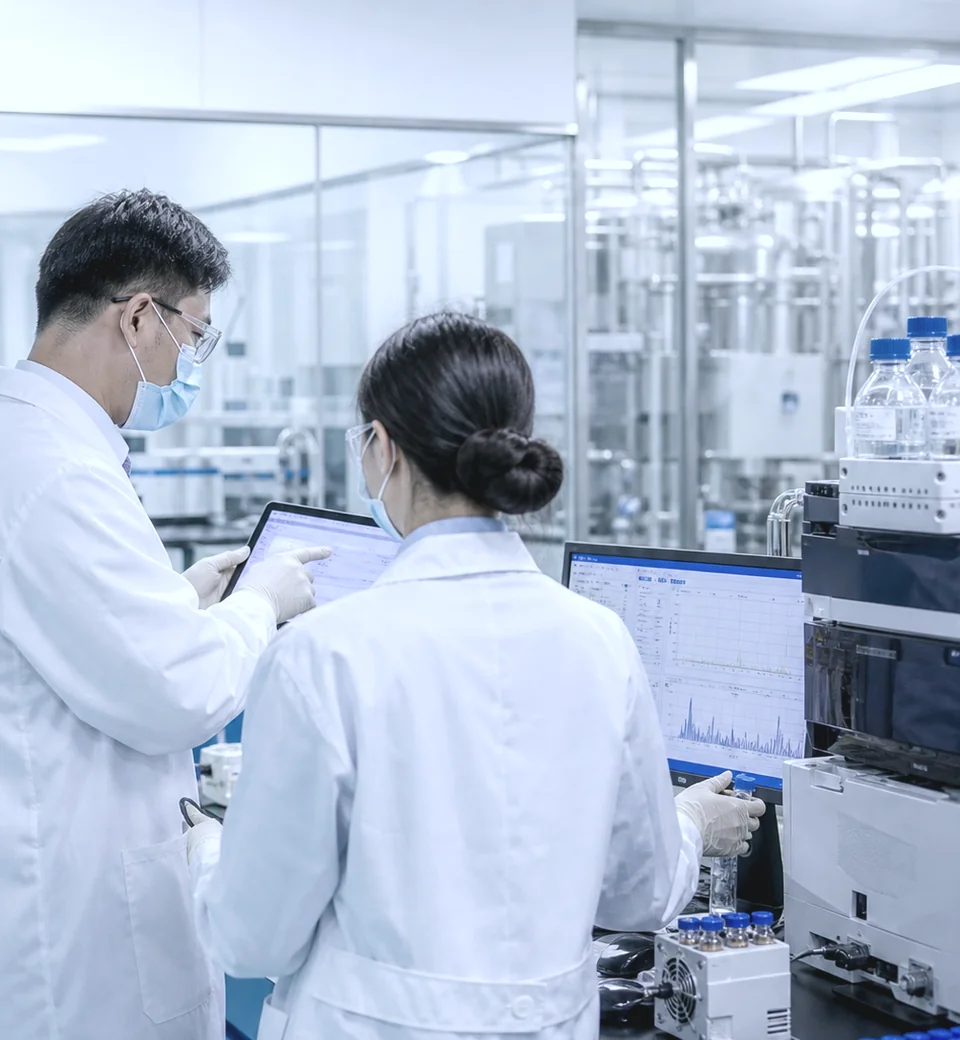
Technology transfer is often treated as a manufacturing handoff, yet peptide projects can involve far more variables than simply sharing a process document. Peptide API production may depend on sequence-specific synthesis conditions, purification behavior, analytical methods, equipment differences, and scale-dependent process parameters. At UTIDE, we view transfer as a technical bridge between development knowledge and manufacturing execution, so procurement teams can benefit from understanding what information must move with the process.
What Technology Transfer Actually Covers
A transfer package normally contains more than a synthetic route. Process descriptions, critical parameters, raw-material requirements, purification conditions, analytical methods, specifications, and batch history may all contribute to process understanding. The level of detail depends on the maturity of the project and the intended manufacturing stage.
Peptide synthesis can be particularly sensitive to scale. Mixing, heat transfer, reaction concentration, resin handling, and purification loading may behave differently in a larger vessel than they did during laboratory development. A process that performed well at small scale may need further assessment before routine production.
The same principle applies to peptide products moving between facilities. Procurement teams should ask whether the receiving site has reviewed the process and analytical package, rather than assuming that a successful laboratory batch automatically represents a transferable manufacturing process.
Identify Scale-Dependent Risks
Scale changes can affect reaction performance in subtle ways. Solvent volumes, reagent addition rates, agitation, temperature control, and filtration conditions may all influence the final outcome. These variables deserve attention because a technically sound process can still behave differently after equipment or batch size changes.
Purification is another important consideration. Column dimensions, resin loading, flow rate, fraction collection, and concentration steps can alter separation performance. Related impurities that were easy to control at one scale may require additional process work when production volume increases.
A useful transfer assessment should distinguish between parameters that are fixed and those that may need adjustment. For peptide API projects, this distinction helps procurement teams understand why a supplier may request additional development work instead of treating scale-up as a simple repetition of the original laboratory procedure.
Protect Analytical Continuity
Analytical methods are an important part of technology transfer because the receiving facility needs a reliable way to evaluate the material. Identity, purity, related substances, water, residual solvents, and other attributes may require specific methods and acceptance criteria.
Method transfer can introduce its own challenges. Differences in instruments, columns, software, sample preparation, or laboratory procedures may influence results. A comparable method should be assessed using appropriate evidence rather than assuming that identical test names produce identical performance.
Documentation should also connect analytical results with the manufacturing process. If a batch shows an unexpected impurity, the development history can help determine whether the issue relates to synthesis, purification, storage, or analytical handling. This connection becomes especially useful when peptide products are produced at a new site.
Review Supplier Scale-Up Experience
Procurement teams can ask how many stages of scale-up a supplier has handled and whether previous projects reached multi-kilogram production. Experience across different scales can reveal whether the supplier understands the practical differences between laboratory development and manufacturing.
At UTIDE, we support scale-up from pilot work to multi-kg projects, alongside custom synthesis, process development, and analytical quality support. Our experience includes more than 10 multi-kg scale projects, giving us practical exposure to the process changes that can appear as production volume increases.
The useful question is not simply whether a supplier has large equipment. Buyers should also examine process-development depth, purification capability, analytical resources, deviation handling, and the quality of the transfer package. These factors together provide a clearer view of manufacturing readiness.
Build a Practical Procurement Checklist
Commercial discussions should include technical questions before a transfer is approved. Procurement teams can ask what process information will be provided, which parameters require confirmation at the receiving site, how analytical methods will be transferred, and what development activities are included in the proposed scope.
Timeline planning deserves similar attention. A transfer may involve document review, technical assessment, engineering batches, analytical comparison, process adjustments, and additional testing. Treating every project as a fixed-duration handoff can create unrealistic expectations.
For peptide API sourcing, buyers can also distinguish between a supplier that merely accepts an established process and one that can investigate unexpected behavior during transfer. That distinction matters if the receiving site encounters differences in yield, impurity profile, purification performance, or batch consistency.
Conclusion
Successful technology transfer depends on preserving process knowledge while adapting that knowledge to a new manufacturing environment. Procurement teams that examine scale effects, analytical continuity, technical documentation, and prior transfer experience can ask more precise questions before a project moves forward.
The objective is not to make every transfer identical, but to understand which elements must remain controlled and which may require development at the receiving site. At UTIDE, we combine development expertise with multi-kg scale-up experience to support the transition of peptide products from established processes toward practical manufacturing programs.