
Summarize this article with AI
Claude and Grok open with the prompt filled in. For ChatGPT, Perplexity, and Gemini, paste the copied prompt into the chat. Click Send when ready.
View prompt for manual copying
Peptide manufacturing converts a defined amino acid sequence into material with controlled identity, purity, content, and stability through synthesis, purification, isolation, and analytical testing. Route selection depends on sequence complexity, modifications, intended use, and production requirements; solid-phase, liquid-phase, and hybrid approaches offer different processing options.
Moving toward commercial supply also requires process understanding, qualification, and ongoing verification. For development and procurement teams, the practical priority is to define specifications early and evaluate synthesis, downstream recovery, and documentation together, using a molecule-specific plan that connects quality expectations with production and supply requirements.
What Are the Key Stages of Peptide Manufacturing?
Peptide manufacturing involves not only synthesis but also the steps needed to purify, isolate, test, and deliver the target material. For synthetic peptide drug substances, the European Medicines Agency (EMA) addresses manufacturing, characterization, specifications, and analytical controls within a unified quality framework.
Planning begins with a clear definition of the target peptide, including its amino acid sequence, terminal groups, stereochemistry, modifications, and relevant counterion. These attributes guide the selection of the manufacturing route and characterization strategy.
The intended application also determines the quality requirements. For drug-development projects, specifications should be supported by process knowledge, relevant batch data, and stability studies. Buyers and manufacturers should therefore agree on target specifications, acceptance criteria, and required documentation before production begins.
UTIDE’s peptide production and delivery workflow provides an example of the main stages: Requirements and target specification confirmation → Process development and optimization → Solid-phase peptide synthesis → Cleavage and crude peptide preparation → Purification → Concentration and salt conversion, if required → Lyophilization → Quality testing and release → Aliquoting and packaging → Delivery and batch traceability.
* The number of purification steps, the need for salt conversion, and the scope of testing are determined by the peptide’s molecular characteristics, intended use, and target specifications.
How Is the Peptide Synthesis Route Selected?
Chemical peptide synthesis commonly uses solid-phase peptide synthesis (SPPS), liquid-phase peptide synthesis (LPPS), or a hybrid approach combining the two; SPPS is currently the most widely used method. Route selection should account for sequence-specific manufacturing challenges and the intended production scale.
● In SPPS, the growing peptide chain remains attached to an insoluble resin as amino acids are added sequentially. This setup supports automated synthesis cycles and allows excess reagents and soluble by-products to be removed by washing and filtration.
● In LPPS, peptide synthesis takes place in solution, allowing reaction conditions to be optimized for individual steps and intermediates to be isolated where needed.
● A hybrid route typically combines SPPS-based fragment synthesis with fragment coupling in solution. This approach can enable separate preparation of peptide fragments, but it also requires control of fragment quality and the subsequent coupling steps.
Whichever route is selected, its development should be supported by substance-specific information. EMA’s guideline expects the manufacturing process development section to address parameters such as reaction times, temperatures, and molar equivalents, even when prior knowledge is used to support general aspects of the process
How Does SPPS Turn a Sequence into Crude Peptide?
SPPS builds the peptide through repeated deprotection and coupling cycles, followed by release from the resin.
Conventional assembly starts with the C-terminal residue attached to the support and extends toward the N-terminus. Protecting groups control which chemical groups can react during chain assembly. After temporary amino-group deprotection, an activated amino acid is coupled to the growing chain; washing separates successive operations.
Incomplete reactions and side reactions can produce deletion sequences, truncated chains, and chemically modified peptides. Because these by-products may remain resin-bound during assembly, cleavage releases a mixture that requires subsequent purification.
Process development therefore evaluates deprotection, washing, coupling, capping (where applicable), and final cleavage conditions. Controlling these steps can reduce the impurity burden presented to downstream purification.
Starting-material quality is another control point because impurities in amino acid derivatives can react during coupling and enter the peptide impurity profile. EMA calls for investigating their potential impact and assessing their fate and removal through manufacturing.
How Are Crude Peptides Purified and Isolated?
Purification separates the target peptide from related sequences and process-derived contaminants. Preparative reversed-phase high-performance liquid chromatography (RP-HPLC) is widely used, followed by isolation operations that commonly include lyophilization, or freeze-drying.
Chromatographic fractions are tested and combined according to defined acceptance criteria. As EMA states, “The pooling strategy should be defined and justified,” with criteria addressing overall purity and individual impurities.
This makes recovery a quality decision as well as a yield decision: accepting additional fractions can change the impurity profile. Repeated purification of suitable side fractions may be incorporated into the routine process when its conditions and acceptance criteria are justified.
The final material also needs an appropriate counterion specification and controls for water and residual solvents. Packaging and handling should account for relevant moisture, temperature, and light sensitivity.
Which Tests Establish Peptide Quality?
Quality assessment combines identity, impurity testing, and assay with other product-specific controls. EMA lists these as separate specification attributes, alongside counterions, water, residual solvents, and microbiological parameters where relevant.
Mass spectrometry can establish molecular mass, while sequence confirmation may require tandem mass spectrometry or other characterization techniques. Chromatographic methods then assess related substances, with additional techniques selected to investigate stereochemical variants or higher-molecular-weight species.
A reported chromatographic purity percentage should therefore be read alongside the assay result and its calculation basis. EMA specifies that liquid-chromatographic assay limits are expressed on a counterion-free, anhydrous basis unless otherwise justified.
For procurement, request the analytical methods, acceptance criteria, batch results, and relevant stability support together. This provides a more informative assessment than selecting material on a single headline purity value.
What Changes During Commercial Scale-Up?
Commercial scale-up requires evidence that the process can reproducibly deliver the specified material. The US Food and Drug Administration (FDA) describes three lifecycle stages: process design, process qualification, and continued process verification.
For pharmaceutical supply, process validation operates within current good manufacturing practice (CGMP) expectations. Qualification evaluates the facility, utilities, equipment, and commercial process, while ongoing monitoring helps detect variation requiring investigation or corrective action.
Material efficiency also deserves early attention. A 2024 study by Kekessie and colleagues compiled 40 synthetic peptide processes from 14 pharmaceutical companies and reported an approximate SPPS process mass intensity (PMI) of 13,000 kilograms of material input per kilogram of product. The authors assessed synthesis, purification, and isolation separately, highlighting opportunities to reduce material consumption across the process. (Kekessie et al., 2024)
For manufacturing teams, this supports evaluating solvent use, purification recovery, and isolation capacity together when developing a scale-up plan.
Batch planning also needs to account for equipment capacity and the relationship between synthesis sub-batches and the final isolated batch. EMA expects manufacturers to justify splitting or pooling, define the commercial batch-size range, and maintain material traceability through to the final drug substance.
Regulatory Guidelines for Peptide Manufacturing
● European Medicines Agency (EMA)’s synthetic peptide guideline, effective June 1, 2026, provides a current reference for these expectations in its applicable European regulatory context. (EMA, Current Guideline)
● For US generic peptide programs, the relevant product-specific recommendations also warrant review. On July 28, 2026, FDA published 17 revised draft product-specific guidances and withdrew its May 2021 guidance on certain highly purified synthetic peptide drug products. (FDA, July 2026 Update)
How Can UTIDE Support a Manufacturing Project?
UTIDE specializes in peptide process development and large-scale manufacturing, offering peptide production from milligram to multi-kilogram quantities. UTIDE’s core team has over 20 years of peptide industry experience, with extensive expertise in process development, impurity control, scale-up, and commercialization. The team’s previous R&D work includes 15 patent records. To date, UTIDE has successfully developed more than 30 peptide molecules and supported over 10 multi-kilogram-scale projects. Representative molecules include Retatrutide, Tirzepatide, Amycretin, Eloralintide, Cagrilintide, BPC-157, MOTS-c, KPV, Semax, and Selank.
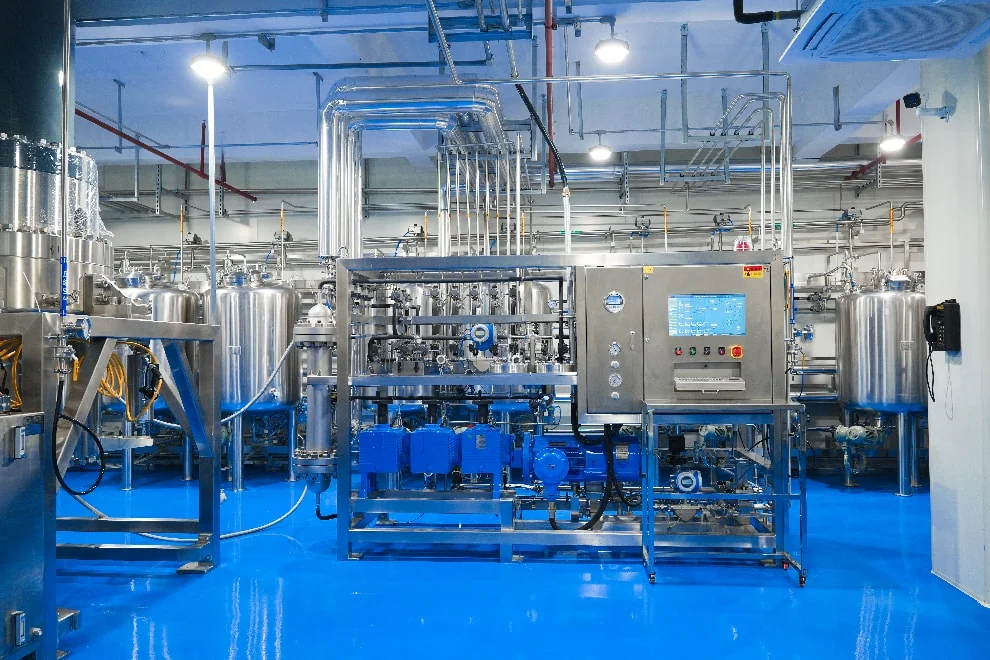
In 2026, UTIDE’s new manufacturing facility, with an annual production capacity of 2,000 kg, began operations, further expanding the large-scale manufacturing capabilities.
Conclusion
Peptide manufacturing integrates route selection, synthesis, impurity control, purification, analytical testing, and lifecycle process management. Commercial readiness depends on demonstrating reproducibility at the intended scale and maintaining process control during routine production.
For development and procurement teams, the next step is a molecule-specific discussion linking specifications to manufacturing feasibility, testing, and supply requirements. Contact UTIDE with your project brief to discuss the appropriate development and manufacturing scope.
References
● European Medicines Agency, Guideline on the Development and Manufacture of Synthetic Peptides
● Stephen B. H. Kent, Fundamental Aspects of SPPS and Green Chemical Peptide Synthesis
● S. Food and Drug Administration, Guidance for IndustryProcess Validation: General Principles and Practices
● Ivy Kekessie et al., Process Mass Intensity (PMI): A Holistic Analysis of Current Peptide Manufacturing Processes Informs Sustainability in Peptide Synthesis